
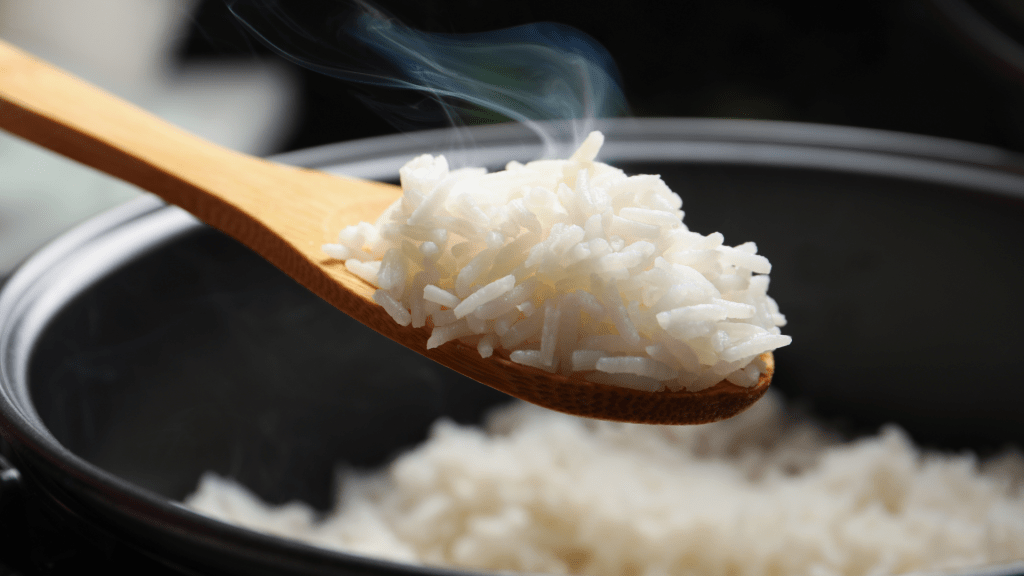
Ah, rice. The humble grain that shows up in everything—from your Friday night curry to those smug Instagram buddha bowls. It’s the unsung hero of the gluten-free kitchen: naturally gluten free (praise be!), endlessly versatile, and almost always there when you need it.
Whether you’re throwing together a midweek stir-fry, building the base for a nourish bowl, or pretending to be fancy with a homemade risotto, rice just works. It doesn’t demand attention—it quietly holds everything together (unlike your last gluten-free pizza base).
But let’s be honest: rice should be easy… and yet, somehow, it’s not.
Undercooked? Crunchy disappointment.
Overcooked? Sad, starchy mush.
Somewhere in between? Cracked, clumped, and questioning your life choices.
Fear not! Whether you’re after fluffy basmati, creamy arborio, nutty black rice or a sticky-sweet Thai sidekick, this is your no-nonsense, gluten-free friendly guide to cooking every type of rice like a pro.
Tools for the Job:
- Saucepan with a tight-fitting lid
- Fine sieve or colander
- Kitchen scales or measuring jug
- Fork (for fluffing – spoons are the enemy)
- Optional: Rice cooker (if you’re fancy)
General Tips for All Rice Types
1. Rinse the rice.
Unless the packet says otherwise (and even then, I side-eye it), rinse under cold water until it runs clear.
2. Mind the ratios.
Different rice, different water. Follow the guide below, not Uncle Dave’s “just eyeball it” technique.
3. Don’t stir (unless it’s risotto).
You’re not making porridge.
4. Let it rest.
After cooking, keep it covered for 5–10 minutes to finish steaming.
5. No peeking!
Every time you lift the lid, a grain of rice dies inside.
10 of the Most Commonly Used Rice Types (and What They’re Best For)
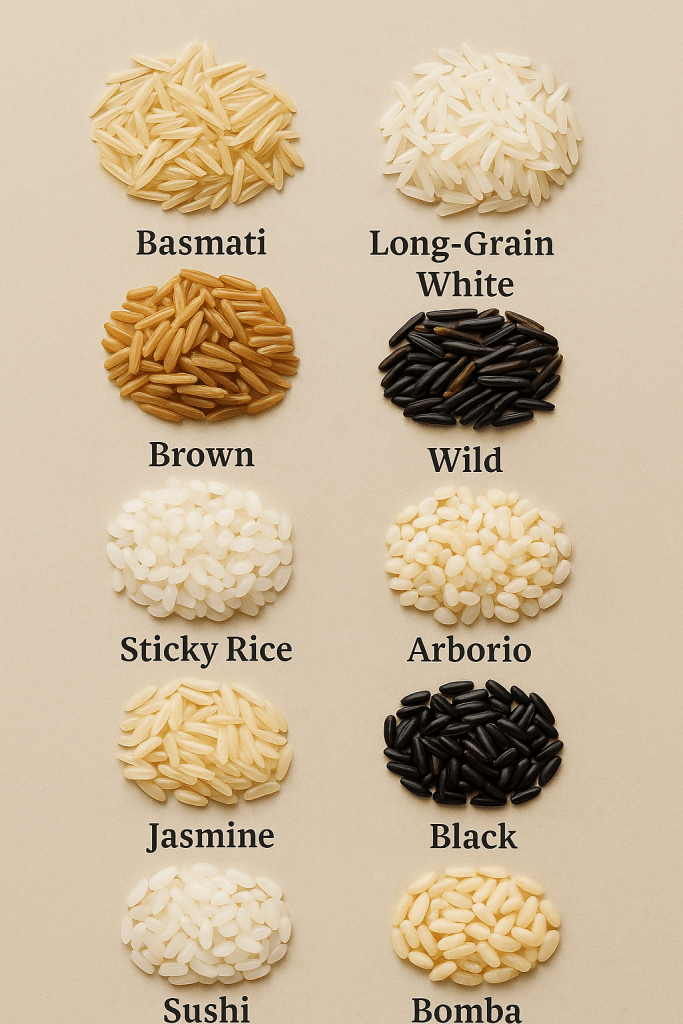
1. Basmati Rice (Long-Grain, Aromatic)
- Water Ratio: 200g rice to 300ml water
- Cook Time: 12–15 minutes
- Great For: Curries, biryani, Middle Eastern dishes
- Top Tip: Soak for 20–30 minutes before cooking for long, fluffy grains.
2. Long-Grain White Rice
- Water Ratio: 200g rice to 400ml water
- Cook Time: 18–20 minutes
- Great For: Stir-fries, chilli, BBQ plates
- Top Tip: Rinse well and don’t stir for fluffy results.
3. Brown Rice (Wholegrain, Chewy)
- Water Ratio: 200g rice to 500ml water
- Cook Time: 35–45 minutes
- Great For: Grain bowls, healthy lunches, hearty salads
- Top Tip: Soak for at least 30 minutes for better texture and quicker cooking.
4. Wild Rice (Technically a Grass)
- Water Ratio: 200g rice to 600ml water (boil and drain like pasta)
- Cook Time: 40–50 minutes
- Great For: Autumn salads, stuffings, sides with a crunch
- Top Tip: Boil in plenty of water, then drain. Let it be wild.
5. Sticky Rice (Glutinous Rice)
- Prep Method: Soak for 5+ hours or overnight, then steam for 20–30 minutes
- Great For: Thai dishes, mango sticky rice, Southeast Asian savoury sides
- Top Tip: Never boil—steam it for that authentic stickiness.
6. Arborio Rice (Short-Grain, Creamy)
- Method: Toast in butter/oil, add warm stock slowly while stirring
- Great For: Risotto, arancini, indulgent rice puddings
- Top Tip: Stir to release starch—this is where the creaminess comes from.
7. Jasmine Rice (Long-Grain, Fragrant)
- Water Ratio: 200g rice to 250ml water
- Cook Time: 12–15 minutes
- Great For: Thai curries, stir-fries, anything needing a fluffy base
- Top Tip: Let it rest covered after cooking to finish steaming.
8. Black Rice (a.k.a. Forbidden Rice)
- Water Ratio: 200g rice to 350ml water
- Cook Time: 30 minutes simmer, 10 minutes rest
- Great For: Colourful bowls, salads, desserts
- Top Tip: Rinse thoroughly and serve with bold flavours to show off the nuttiness.
9. Sushi Rice (Short-Grain, Seasoned)
- Water Ratio: 200g rice to 200ml water
- Cook Time: 20 minutes simmer, 10 minutes rest
- Great For: Sushi, poke bowls, rice balls
- Top Tip: Rinse thoroughly, then season warm rice with rice vinegar, sugar, and salt.
10. Bomba Rice (Short-Grain, Spanish Star)
- Water Ratio: 200g rice to 500–600ml stock
- Cook Time: 18–20 minutes
- Great For: Paella, Spanish rice dishes
- Top Tip: Don’t stir once cooking begins—let the socarrat form on the bottom for that crispy magic.
How to Stop Your Rice from Cracking or Splitting
- Soak when needed – especially basmati, brown, or sticky rice
- Use gentle heat – rapid boiling = split grains
- Follow water ratios – too much and your rice explodes emotionally
- Don’t stir mid-cook – unless it’s risotto, hands off!
- Let it rest – 10 minutes under the lid is the secret to happy rice
Final Thoughts
Rice can be a diva—but once you learn how to handle it, you’ll wonder how you ever settled for the sad microwave packet stuff. It’s gluten-free, full of character, and plays nice with almost every dish in your repertoire.
Got a favourite rice dish or a secret tip from your gran? Drop it in the comments—I’m always up for learning (and stealing) new tricks!


Leave a comment