(And Why “A Little Bit Won’t Hurt” Might Be the Most Dangerous Sentence We Hear)
Let’s get something straight from the start:
Vegan, keto, paleo, low-carb — those are dietary choices.
Coeliac disease? That’s the autoimmune condition that ruins brunch, makes you read crisp packets like legal contracts, and gives you trust issues with soup.
Despite that, gluten-free living still gets lumped in with diet trends and wellness fads. Thanks to social media and the occasional celebrity cutting out bread for “bloating,” people assume gluten-free = lifestyle choice.
It doesn’t.
And that public misunderstanding? It’s not just frustrating — it’s genuinely dangerous for people like me who live with coeliac disease.
The problem isn’t just ignorance. It’s indifference.
When gluten-free is treated like a fad, our needs stop being taken seriously.
We get labelled fussy, awkward, or “too sensitive.” We hear things like:
- “Can’t you just pick the croutons off?”
- “It’s only a little bit of flour.”
- “Are you actually allergic or just doing it for health reasons?”
And every time someone says, “It won’t kill you,” — they’re missing the point.
We’re not being dramatic. We’re being careful. There’s a difference.
The real-world impact of misunderstanding
1. Cross-contamination in cafés and restaurants
You can’t slap “GF” on a menu and call it a day.
If food is made using the same utensils, cooked on the same grill, or dusted with wheat flour in the same kitchen, it’s not safe for someone with coeliac disease.
Even crumbs cause damage. Not just discomfort — damage.
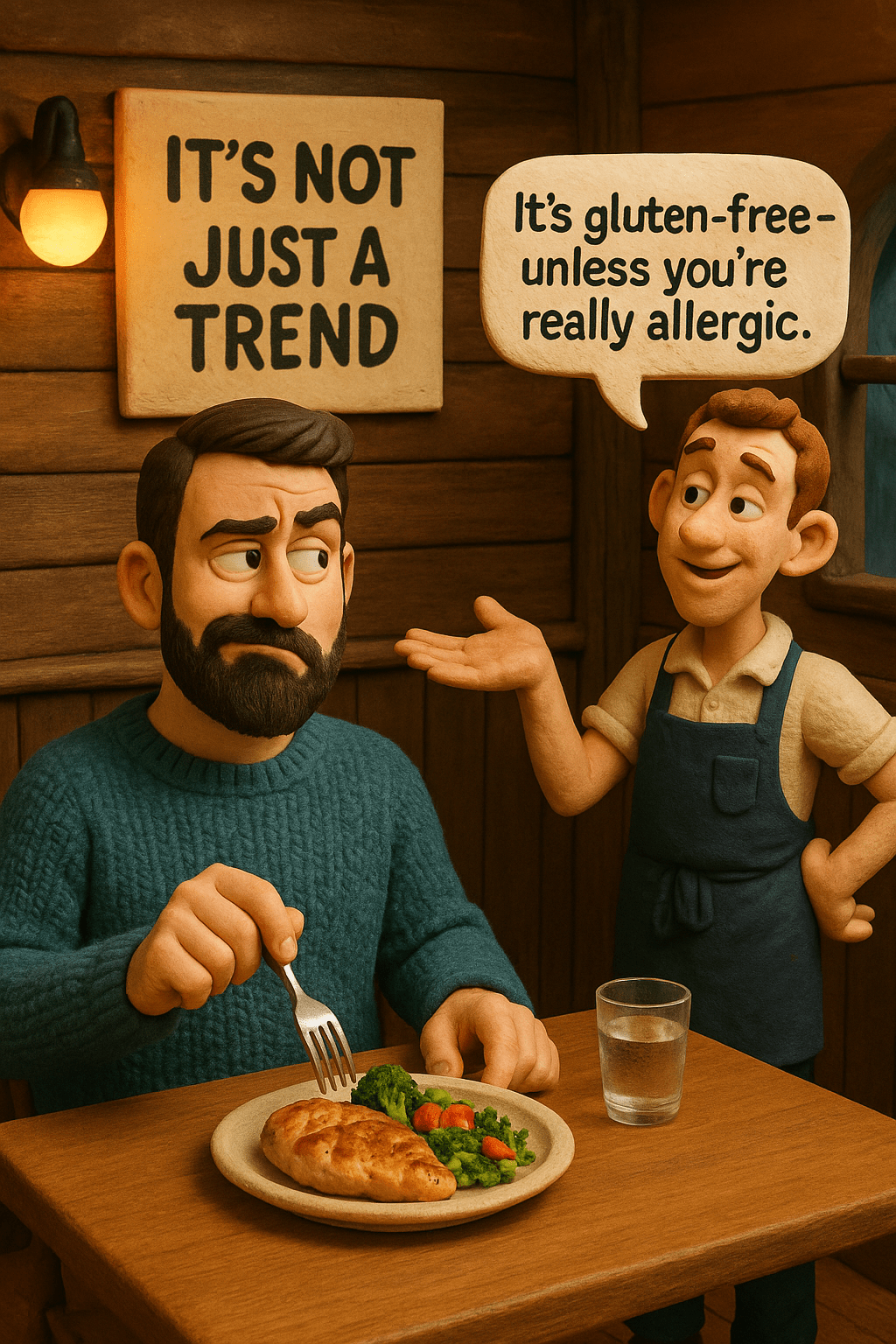
Every time a server says, “It’s gluten-free unless you’re really allergic,” a coeliac somewhere clenches — and starts mentally drafting their will.
2. Dismissive healthcare
Many of us spent years being told it was IBS, anxiety, hormones, or “just stress.”
We were bloated, exhausted, anaemic, foggy, depressed, and in pain — and still not taken seriously.
One doctor once told me it might be caused by eating too many carrots. Carrots.
Even today, some GPs don’t know you need to be eating gluten before a coeliac test. The misinformation isn’t just on TikTok — it’s in the system.
And that delay in diagnosis? It means more suffering, more damage, more people left undiagnosed.
3. Social exclusion and emotional fallout
When people think gluten-free is “just a lifestyle,” we get left out of meals — and often, out of the conversation entirely.
We’re seen as difficult. We stop getting invited to dinner.
Or worse — we show up and someone says, “Don’t worry, there’s salad.”
Spoiler: it’s always the salad. You know the one. Wet lettuce under a quiche.
We’re not trying to be awkward. We’re just trying to avoid being poisoned by your canapés.
Misunderstanding isn’t harmless. It’s dangerous.
There’s this persistent myth that “a little bit won’t hurt.”
It always hurts.
Even if we don’t react visibly or instantly, our bodies are still under attack. One shared toaster, one slip of a spoon, one floury work surface — and we’re out of action for days. Sometimes longer.
And the long-term risks? Think malnutrition, bone loss, infertility, nerve damage, and a higher risk of some cancers.
All because someone thought we were just being picky.
This isn’t about preference. It’s about protection.
Look — I’m not anti-choice.
People should absolutely be able to eat the diets that suit their lives. Go keto. Go plant-based. Go full caveman if you like.
But coeliac disease isn’t a preference.
We’re not “doing gluten-free.” We are gluten-free. Whether we like it or not.
(And trust me, most of us didn’t exactly choose a life without Greggs sausage rolls, beer on tap, or worry-free pub pies.)
So how can you help?
- Believe us when we say something isn’t safe.
- Respect our boundaries, even if you don’t fully understand them.
- Ask questions — and actually listen to the answers.
- Speak up when someone makes a joke at our expense or rolls their eyes at our “restrictions.”
- And if you run a food business: learn how to do gluten-free safely. Your customers are trusting you with their health.
Awareness isn’t just a buzzword — it’s a safety net.
Every time someone shares a post like this, challenges a myth, or asks why gluten-free needs to be taken seriously, it helps.
It helps someone like me feel seen. It helps someone else get diagnosed.
And maybe — just maybe — it stops someone from being glutened because of a poorly wiped chopping board.
We don’t need pity. We need understanding.
And maybe our own toaster. And someone to guard the chips at family BBQs like it’s the Crown Jewels.


Leave a comment