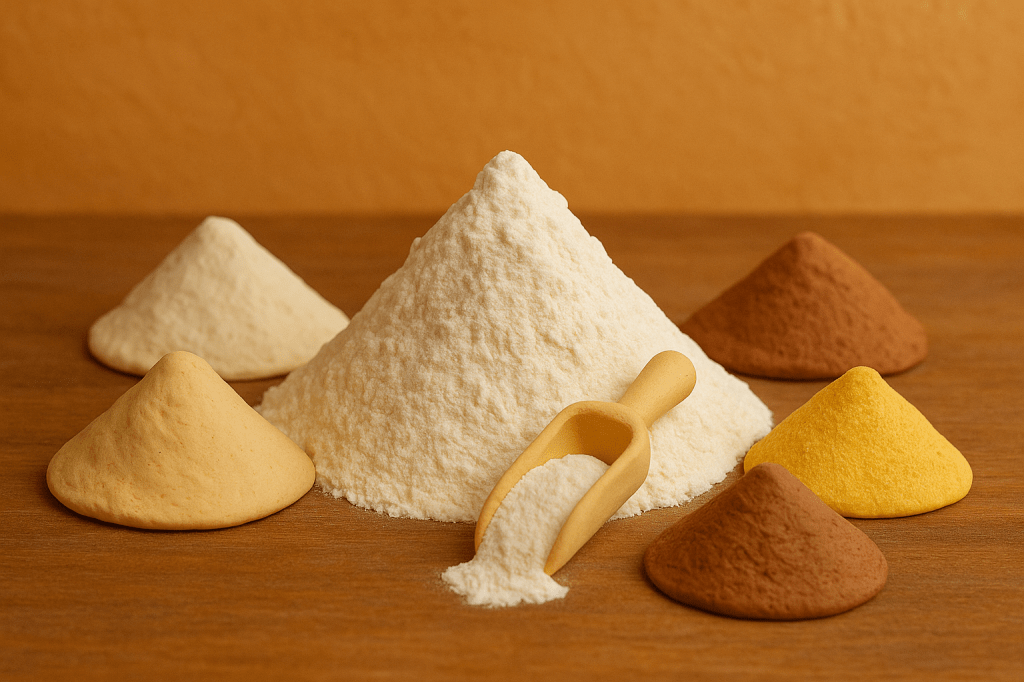
Going gluten free often means re-learning how to bake and cook. And let’s be honest: it can feel like you’ve stepped into a science lab with all these bags of mysterious powders. Almond? Sorghum? Teff? Potato-but-not-potato starch? Don’t panic. Think of gluten-free flours as a toolbox, each one has its own job, its own flavour and its own quirks.
Here’s your friendly breakdown of the most common and best gluten free flours, what they’re good for and a few things to watch out for.
- 🌰 Almond Flour
- 🥥 Coconut Flour
- 🍚 Rice Flour
- 🌾 Sorghum Flour
- 🌱 Buckwheat Flour
- 🌟 Tapioca Flour (Starch)
- 🌽 Corn Flour (Maize Flour)
- 🌱 Chickpea (Gram) Flour
- 🌾 Millet Flour
- 🌱 Quinoa Flour
- 🌱 Teff Flour
- 🌱 Amaranth Flour
- 🥔 Potato Flour (not starch)
- 🌾 Oat Flour (Certified Gluten-Free)
- 🌰 Chestnut Flour
- Mixing It Up: Gluten-Free Flour Blends
- Gluten Free Flours – Frequently Asked Questions
- Keep Reading
🌰 Almond Flour
- Best for: Cakes, brownies, biscuits and muffins, basically anywhere you want moisture and richness.
- Flavour: Mild, nutty and slightly sweet.
- Watch out: Can make bakes heavy if used alone. Usually needs eggs or binders.
🥥 Coconut Flour
- Best for: Pancakes, muffins and low-carb baking.
- Flavour: Sweet, coconutty, tropical.
- Watch out: Absorbs a lot of liquid. Without extra eggs or liquid, you’ll end up with a dry, chalky bake.
🍚 Rice Flour
- Best for: Everyday flour blends, light cakes, noodles, batters.
- Flavour: Neutral, slightly gritty on its own.
- Watch out: Can feel sandy if overused, works best in a blend.
🌾 Sorghum Flour
- Best for: Adding mild sweetness and softness to bread, muffins, pancakes.
- Flavour: Mild, earthy, slightly sweet.
- Watch out: Too much makes things heavy, best as part of a mix.
🌱 Buckwheat Flour
- Best for: Pancakes, crêpes, rustic breads, soba noodles.
- Flavour: Strong, earthy, nutty.
- Watch out: The bold flavour can overpower delicate bakes, great in savoury dishes though.
🌟 Tapioca Flour (Starch)
- Best for: Thickening sauces, giving chewiness to bread, adding stretch to pizza bases.
- Flavour: Neutral.
- Watch out: Too much = gummy disaster.
🌽 Corn Flour (Maize Flour)
- Best for: Tortillas, cornbread, batters.
- Flavour: Mildly sweet, classic corn taste.
- Watch out: Easy to confuse with cornstarch (US and called cornflour in the UK). Cornstarch is a pure white starch used for thickening sauces, while maize flour (UK and called corn flour in the US) is yellow and used for baking/cooking.
🌱 Chickpea (Gram) Flour
- Best for: Flatbreads (like socca), pakoras, fritters, savoury pancakes.
- Flavour: Earthy, slightly bitter if undercooked.
- Watch out: Needs proper cooking, raw chickpea flour tastes dreadful.
🌾 Millet Flour
- Best for: Light breads, muffins, pancakes.
- Flavour: Mild, slightly sweet, a bit like corn.
- Watch out: Can make bakes crumbly if used in large amounts.
🌱 Quinoa Flour
- Best for: Adding protein and nutrition to breads, pancakes, or cookies.
- Flavour: Nutty, grassy, sometimes bitter unless toasted.
- Watch out: Strong taste, usually best in small amounts, blended with other flours.
🌱 Teff Flour
- Best for: Traditional injera, pancakes, brownies.
- Flavour: Earthy, nutty, slightly malty.
- Watch out: Can make things heavy, better in a blend.
🌱 Amaranth Flour
- Best for: Adding nutrition and a nutty flavour to breads, biscuits, pancakes.
- Flavour: Slightly peppery, nutty.
- Watch out: Strong, so best in small amounts.
🥔 Potato Flour (not starch)
- Best for: Keeping breads soft and moist.
- Flavour: Mild potato taste if overused.
- Watch out: Not the same as potato starch. Potato flour is heavier, made from whole dried potatoes, and adds moisture, while potato starch is a lighter, neutral powder that’s best for thickening or softening bakes.
🌾 Oat Flour (Certified Gluten-Free)
- Best for: Cookies, muffins, pancakes, quick breads.
- Flavour: Mild, sweet, comforting.
- Watch out: Only safe if labelled gluten-free (cross-contamination risk is high).
🌰 Chestnut Flour
- Best for: Cakes, pancakes, biscuits, festive bakes.
- Flavour: Sweet, nutty, slightly earthy.
- Watch out: Pricey and not always easy to find, but a treat for autumn and Christmas.
Mixing It Up: Gluten-Free Flour Blends
Here’s the big secret: gluten-free baking is rarely about one flour. Think of it like a band, you don’t want a 90-minute drum solo, you want the whole group playing together. Blending flours balances out strengths and weaknesses, giving you structure, flavour, and texture in the same bake.
Why Blend Flours?
- Texture balance: Rice flour adds lightness, but it can be gritty, mix it with tapioca or potato flour for softness.
- Flavour balance: Buckwheat is bold and earthy, while sorghum or millet mellow it out.
- Structure: Starches (tapioca, cornflour, potato starch) help hold things together, while protein-rich flours (quinoa, chickpea, almond) stop bakes being flimsy.
Three DIY Gluten-Free Flour Blends
🍰 1. Everyday Baking Blend (Cakes, Muffins, Biscuits)
- 2 cups (240 g) white rice flour
- 1 cup (120 g) sorghum flour
- 1 cup (120 g) tapioca starch
- ½ cup (60 g) potato starch
👉 Great for sponges, brownies, cookies, and anything you want light but not sandy.
🍞 2. Rustic Bread Blend
- 1½ cups (180 g) brown rice flour
- 1 cup (120 g) buckwheat flour
- 1 cup (120 g) millet flour
- 1 cup (120 g) tapioca starch
- ½ cup (60 g) potato flour
👉 Perfect for loaves, rolls, and anything where you want a proper “bite” rather than cakey softness.
🥞 3. Pancake & Flatbread Blend
- 1 cup (120 g) chickpea flour
- 1 cup (100 g) oat flour
- 1 cup (120 g) white rice flour
- ½ cup (60 g) tapioca starch
👉 Ideal for pancakes, wraps, tortillas, and flatbreads, holds together well without crumbling.
General Tips for Blending
- Use binders: Even with blends, xanthan gum, psyllium husk, chia or flax often help mimic gluten’s stretch.
- Play with ratios: If something feels too heavy, add more starch. Too flimsy? Add more wholegrain/protein flours.
- Small batch first: Nobody wants to waste expensive flour on a flop, test blends in little recipes first.
Gluten Free Flours – Frequently Asked Questions
Is almond flour gluten free?
Yes, almond flour is naturally gluten free. It’s made from finely ground blanched almonds and works best in cakes, biscuits and sweet bakes. Because it’s high in protein and fat, it often needs to be combined with other gluten free flours for lighter results.
Which gluten free flour is best for bread?
Many bakers find that a blend works best. Rice flour, potato starch and tapioca flour are common in bread mixes because they balance each other out. Buckwheat flour can also add structure and flavour. If you want a shortcut, go for a pre-mixed gluten free bread flour rather than using one flour on its own.
Can I replace wheat flour with gluten free flour 1:1?
Not always. Some gluten free flours are more absorbent than wheat, so you often need extra liquid or an added binder like xanthan gum. If you’re new to gluten free baking, try recipes written specifically for gluten free flours rather than swapping straight in.
What is the closest gluten free flour to wheat flour?
For texture, sorghum flour or oat flour (certified gluten free) can be good substitutes. For neutral flavour, rice flour comes closest, but usually you’ll get the best results from a blend rather than a single flour.
Are all gluten free flours healthy?
Not necessarily. “Gluten free” doesn’t always mean “healthier.” Some gluten free flours, like almond or buckwheat, are nutrient-dense. Others, like white rice flour, are more refined and lower in fibre. The key is mixing different flours for balance.
Do gluten free flours expire?
Yes – and sometimes more quickly than wheat flour. Nut-based flours like almond or coconut can go rancid if not stored properly. Always check the best-before date and keep them in a cool, dry place. For longer life, store them in the fridge or freezer.
Keep Reading
Gluten free life isn’t just about avoiding wheat, it’s about finding the best substitutes that actually taste amazing. Here are some posts you’ll love…
If you’ve been enjoying these posts, check out The Gluten Free Chronicles. It’s my personal series on life with coeliac disease, the highs, the lows and the snacks in between.


Leave a comment